


How Often Should You Actually Do Yoga? What Experts Recommend
What clinically reviewed sources and specialists recommend about how often yoga, breathwork and meditation pay off the most, and why that’s different for your body than for your breath.
I regularly get asked: how often should I actually be doing this? Yin Yoga, breathwork, meditation, when does it really work? Or people ask whether it still works if they only do it very briefly, or whether they’d rather do one long session once a week.
My answer has actually been the same for years: better often and short than once and very long. Long sessions are lovely and good if you have the time for them. But with most things, and especially with meditation and breathwork, you get the most effect when you do it briefly but regularly. Daily, ideally, and if you can manage it, even several short moments a day. Think of a mindful moment, or just seeking out a few minutes of stillness.
I do this myself too, several times a day. Sometimes just a minute.
My week looks like this. Two to three yoga practices, usually Yin Yoga. A meditation every morning and every evening. And during the day, I catch the small moments.
That last one might be the most important part. LAND • BREATHE • FEEL is something I use as a kind of mantra, in moments that are already there anyway. Waiting in line, being outside, walking the dogs. Feet on the ground, a calm breath, and just noticing what’s there. Sometimes I add a bit of Qigong, or a very deliberate short walking meditation.
Each of those moments means little on its own. Together, they keep me coming back to myself.
I recently read an article that seemed to confirm exactly this: a regular short moment of rest has an enormous effect. Good, I thought, that matches what I always say. But the article named no author, no university, no journal. So I did what I always do when something sounds too good to simply believe: I went and looked into it myself.
Experts say the same thing. For asanas, three to five times a week with rest in between works best, while breathwork and meditation actually benefit from a daily, short rhythm, ideally even a few times a day. Five reputable sources confirm what I’ve been saying in class for years.
What I found when I went looking
The article itself turned out to be untraceable. So I went and did the research myself.
| Beginner | 2–3x | ||
| Intermediate | 4–5x | ||
| Advanced | 5–6x / daily. |
Source: Calm, clinically reviewed. Reason: muscles and joints need to recover between sessions.
| Breathwork (blood pressure) | 15 min/day | ||
| Meditation | a few min, more often per day is fine |
Source: Harvard Health and Mayo Clinic. Reason: no muscle recovery needed, but consistency matters.
The logic behind this is simple, but it’s worth knowing where it comes from. Calm builds up frequency by level because your body, just like with strength training, needs recovery time between sessions. NCCIH confirms this from a completely different angle: in the programmes they reviewed, at least three longer sessions a week (75 to 90 minutes) gave the best results for weight loss. Two different angles, the same conclusion for your body.
A different mechanism applies to breath and meditation. There’s no muscle that needs to recover, so daily and short is more effective than occasional and long. Harvard Health backs this up concretely with clinical research on blood pressure: fifteen minutes of slow breathing, every day. Mayo Clinic and Eric Loucks of Brown University are more cautious with hard numbers for meditation, but both see the same pattern: a few minutes that you keep up every day works better than one long session a week that you skip anyway when things get busy.
None of these sources test asanas and pranayama directly against each other in a single study. It’s a composite picture drawn from several reputable sources (Calm, NCCIH, Harvard Health, Mayo Clinic and Brown University, all listed below under sources), not the result of one study.
Why that distinction is clarifying
The body asks for regularity, but not necessarily daily effort. Muscles, joints and connective tissue need time to recover between sessions. Breath and stillness work differently: they actually benefit from a daily rhythm, even if that’s just a few minutes.
That fits how the InnerPower Method is built. LAND • BREATHE • FEEL isn’t a fixed length or a fixed slot in your agenda, it’s a movement that works at any scale. You move through it just as well in a full one-hour class as in three minutes before you fall asleep. Not trying to do more, but letting the movement itself last more often or longer, whatever fits that day.
LAND • BREATHE • FEEL
The same three steps, whether you’re standing on the mat for an hour or sitting down for three minutes before bed.
No pressure to complete a full schedule. Just arriving at what’s possible today, whether in a full class or in ten seconds on the edge of your bed.
A few minutes on a quiet day, or the thread running through a full asana practice. Both count.
Noticing what the session does to you, short or long, instead of keeping score of whether you stuck to a strict schedule.
A practical step for today
For you, this might mean: no pressure to do a full class every day, but the intention to land and breathe briefly each day, ideally even a few times a day, and to move more consciously a few times a week.
Small, achievable regularity beats a strict schedule you won’t stick to anyway.
I build it up like this myself: a fixed meditation in the morning and evening, and during the day, when I walk the dogs, often some Qigong, breathwork or a short walking meditation. None of those moments last long. Together, they make the difference.
Pick one moment today that’s already part of your day, for instance right before falling asleep or during a walk, and attach three minutes of breath or stillness to it. Not as an extra task, but as a fixed anchor point. If you want to build out that stillness a bit further, Yoga Nidra is a lovely form to practise daily and briefly, or occasionally for a bit longer.
So you don’t have to do this perfectly. There’s no fixed recipe that works for everyone. Your body and your nervous system both give their own signals about what’s enough, so listen to those above all.
What does hold up, viewed from five different angles: more often and short is usually more valuable than occasionally and long.
Frequently Asked Questions
Is doing yoga once a week enough?
Once a week definitely helps, you’ll notice relaxation and more body awareness from it. For the physical benefits of asanas, clinically reviewed guidelines cite three to five times a week as a build-up toward more effect. Start with what’s achievable and build up gradually, rather than imposing a strict schedule right away.
Can you do too much yoga?
Yes, your body needs recovery too. Especially with more intensive forms, practising too often without rest can actually create tension or overload. Yin Yoga is inherently gentler, but even then, listening to your body remains more important than sticking rigidly to a schedule.
Do I have to meditate every day to notice anything?
Not every day has to be perfect, and there’s no proven ideal dose. Mayo Clinic already calls a few minutes a day valuable, and meditation experts generally see that more practice yields more benefit. So a few minutes a day already counts, as long as you can sustain it.
How long does it take before you notice results from yoga or breathwork?
That differs per person and per goal. Many people notice relaxation and a calmer mind after just a few sessions. More flexibility, strength, or a structurally calmer nervous system takes weeks to months of regular practice. Patience and repetition work better here than intensity.
Is a short practice every day better than one long class a week?
For breath and meditation, usually yes. For physical practice, three to five times a week with sufficient length is more valuable than very briefly every day. The combination often works best: landing and breathing briefly every day, moving more consciously and for longer a few times a week.
What is the InnerPower Method LAND • BREATHE • FEEL?
The InnerPower Method is a cyclical return practice, developed by Ilse-Marie Sobering. LAND stands for landing in the body, BREATHE for making space through the breath, and FEEL for noticing what’s really going on. It isn’t a three-step plan, but a path you can return to again and again, even in a few minutes a day.
This blog shares research and practical experience, and is not medical or therapeutic advice. If you have an injury, a condition, or persistent complaints, have someone assess your personal situation.
The five sources behind this blog
1
Calm, clinically reviewed by Dr. Chris Mosunic (PhD, RD, CDCES). How Often Should You Do Yoga?
Guideline per level: beginners 2 to 3 times a week, intermediate 4 to 5 times, advanced 5 to 6 times or daily.
2
NCCIH, part of the American National Institutes of Health. Yoga: Effectiveness and Safety
For weight loss, longer, more frequent sessions (at least 3 times a week, 75 to 90 minutes) gave the best results.
3
Harvard Health Publishing.Breathing exercises to lower your blood pressure
Fifteen minutes of slow, deep breathing daily can lower blood pressure.
4
Mayo Clinic.Meditation: a simple, fast way to reduce stress
A few minutes a day can already be enough; consistency matters more than a strict schedule.
5
Eric B. Loucks, PhD, director of the Mindfulness Center, Brown University, in Psychology Today. How Much Should I Meditate?
No proven ideal dose; more practice generally yields more, and personal experimentation is recommended.
Ilse-Marie Sobering is the founder of House of InnerPower and the creator of the InnerPower Method: LAND • ADEM • VOEL (Land, Breathe, Feel), a cyclical practice of returning to yourself again and again. She has studied yoga philosophy and Eastern philosophy for more than 25 years, and has worked professionally since 2015 as an E-RYT 500 yoga and Yoga Nidra teacher, mindfulness and breathwork coach, Ayurveda practitioner and EFT (Emotional Freedom Techniques) practitioner. In Spain, where she lived for seven years, she taught trainings, teacher trainings and retreats at various locations in the Málaga region, including near Periana, Nerja and Frigiliana. She now works from the Netherlands, teaching trainings and speaking in the Netherlands, in Spain and online. Within the method she works with Yin Yoga, Yoga Nidra, breathwork, meditation, Qigong and somatic work, complemented with elements from her hypnotherapy training. She teaches teacher trainings, continuing education and company training, for people living with long-term stress and for professionals who want to deepen the way they guide others.
Stay in the loop
Join the House of InnerPower newsletter
Curious what else House of InnerPower offers? See our upcoming agenda, or sign up below and we’ll send you one welcome email with the essentials, nothing more unless you want it.
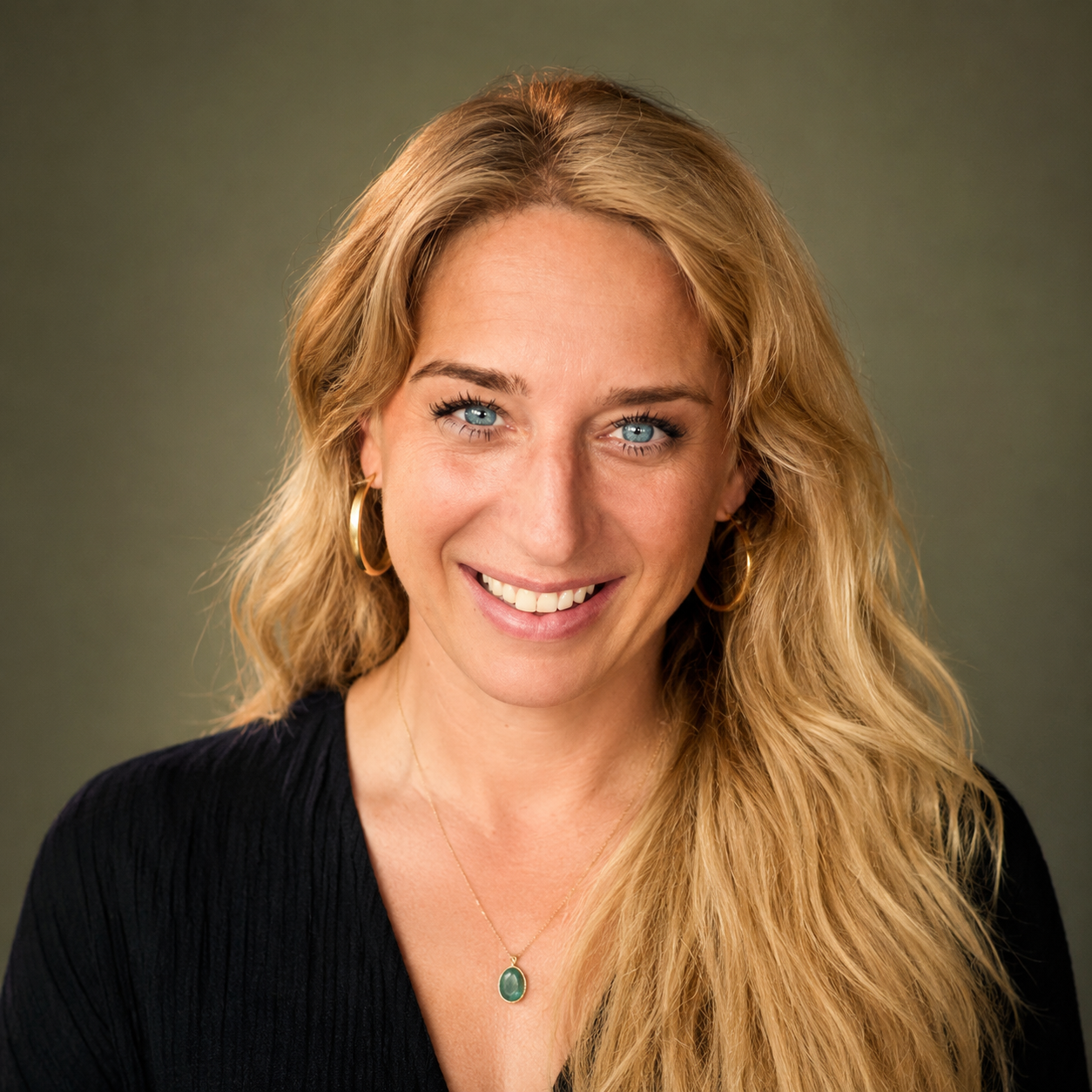
Ilse-Marie Sobering is the founder of House of InnerPower and the creator of the InnerPower Method: LAND • ADEM • VOEL (Land, Breathe, Feel), a cyclical practice of returning to yourself again and again. She has studied yoga philosophy and Eastern philosophy for more than 25 years, and has worked professionally since 2015 as an E-RYT 500 yoga and Yoga Nidra teacher, mindfulness and breathwork coach, Ayurveda practitioner and EFT (Emotional Freedom Techniques) practitioner. In Spain, where she lived for seven years, she taught trainings, teacher trainings and retreats at various locations in the Málaga region, including near Periana, Nerja and Frigiliana. She now works from the Netherlands, teaching trainings and speaking in the Netherlands, in Spain and online. Within the method she works with Yin Yoga, Yoga Nidra, breathwork, meditation, Qigong and somatic work, complemented with elements from her hypnotherapy training. She teaches teacher trainings, continuing education and company training, for people living with long-term stress and for professionals who want to deepen the way they guide others.
