



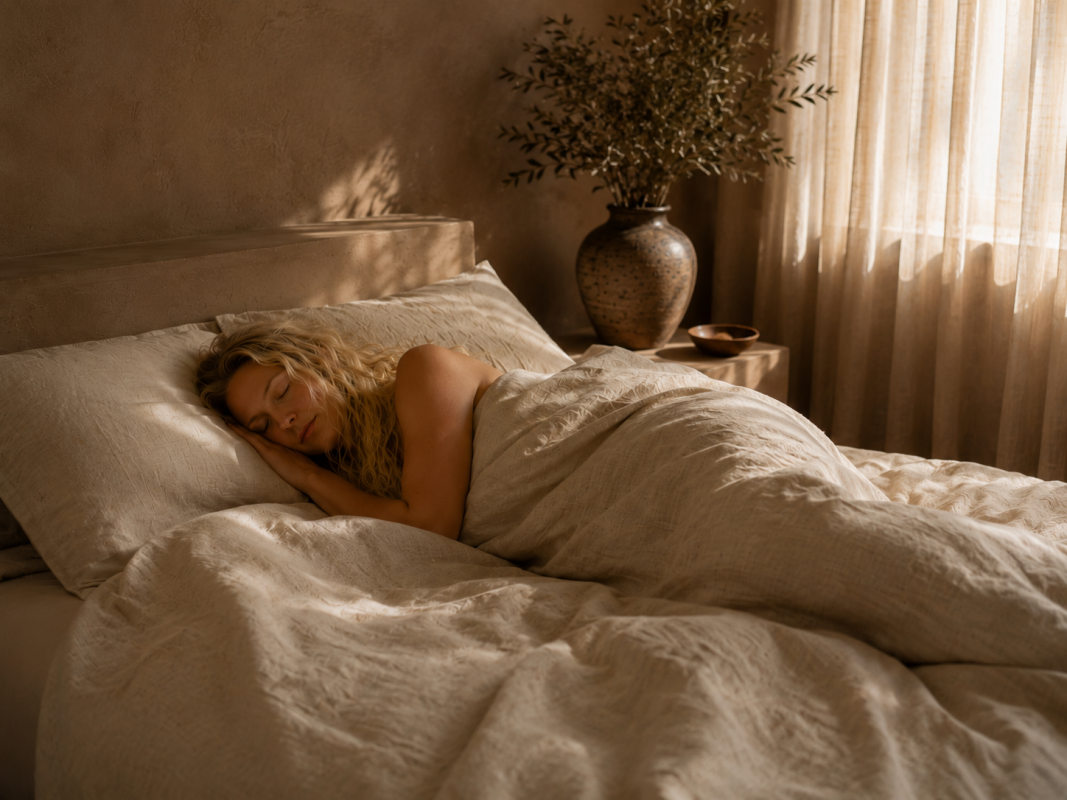
Sleep & Nervous System
Why You’re Tired But Can’t Fall Asleep
Not being able to fall asleep is rarely a problem of the night alone. It’s usually a body that didn’t get the chance to land during the day.
By Ilse-Marie Sobering
You’re lying in bed. Tired. Really tired. And still, sleep won’t come. Your thoughts keep turning, your body lies still but is still switched on inside. You roll over, check the clock, calculate how many hours you have left. And the longer it takes, the more awake you become.
Maybe you think you’re simply a bad sleeper. Or that it’s all in your head. Or that you’re just an overthinker. But often something else is going on. Not being able to fall asleep is rarely a problem of the night alone. It’s usually a body that didn’t get the chance to land during the day.
Why don’t you settle at night?
Sleep isn’t a switch you flip. It’s more of a descent. Your body needs to feel safe enough to let go of the watch.
If your days are full, if you move from one thing to the next, if you’re always a little bit switched on, your system stays in a mild state of alertness. That’s not strange. Your body is doing exactly what it thinks is needed: staying alert. But the moment you finally lie still, everything you kept at a distance during the day comes back up. The tension you didn’t feel. The thoughts that had no room. The exhaustion that runs deeper than sleep.
Your body is doing exactly what it knows. It waits until it feels safe enough to settle.
What happens in your body when you can’t fall asleep?
Your nervous system has a part that drives you and a part that brings you to rest. During the day you often need that driving part. But to fall asleep, the calming part needs to slowly take over.
What helps with this is well known: breathing slowly, with a slightly longer exhale. In a small study, healthy participants consciously exhaled longer than they inhaled, and that shifted the balance in their nervous system toward the calming side. A broad review of fifteen studies showed the same direction: calm breathing, fewer than ten breaths per minute, is linked to more rest in the body and more recovery.
The good part is that you don’t need anything complicated for this. No app, no technique you have to perform perfectly. Just attention, and a body that’s allowed to settle.
The InnerPower Method
LAND • BREATHE • FEEL
Not a trick for the night, but a way to keep returning to yourself. Even right before sleep.
LAND
Feel your body again. Feet under the duvet, your back in the mattress, your head on the pillow. What often helps: consciously tense a few muscles for a moment, your hands, your shoulders, your legs, then release them with an exhale. Once more. Your body feels the difference between tension and relaxation, and settles more easily because of it. Feel what you’re carrying. You don’t need to go anywhere.
BREATHE
Notice your breath. You don’t need to steer it or improve it. Let your exhale become a touch longer than your inhale. That’s all. It quiets down by itself.
FEEL
And then, from that stillness, notice what’s still there. Tension in your jaw, your shoulders, your belly. You don’t need to solve it. You’re only allowed to see it.
Often the three flow into each other. Sometimes you breathe calmly a few times and land by yourself. Sometimes you notice you first need to settle further before there’s anything to feel. That’s not wrong. That’s how it works.
And what if lying still brings more unrest?
For some people, lying still does the opposite. The moment it gets quiet, more comes up. More thoughts, more tension, more unrest. If that sounds familiar, that’s understandable. Your body is simply asking for something different.
Then you’re allowed to make it smaller. Just feel your feet. Just one calm breath. Or open your eyes for a moment and see the room around you. Landing doesn’t have to be big. Sometimes one small moment of safety is enough to return a little.
And if sleeplessness continues for a long time and starts to weigh heavily, it’s wise to have someone assess your personal situation. Not because something is wrong with you, but because you don’t have to carry it alone.
Frequently asked questions
Questions people often ask me about sleep
Why can’t I fall asleep when I’m exhausted?
Being tired and settling into rest are two different things. You can be exhausted while your nervous system is still in a state of alertness. The moment you lie still, the tension you kept at a distance all day surfaces after all. Your body then waits until it feels safe enough to settle.
Does breathing really help you fall asleep better?
Calm breathing with a slightly longer exhale shifts the balance in your nervous system toward rest and recovery. Research on slow breathing, fewer than ten breaths per minute, consistently shows that direction. It’s not a sleeping pill, but it does make the path to sleep easier to walk.
What is the InnerPower Method?
The InnerPower Method is LAND • BREATHE • FEEL, developed by Ilse-Marie Sobering of House of InnerPower. It’s a cyclical return practice: you learn to notice when you drift away from yourself, and you get the tools to return again and again, through your body, your breath, and feeling. Not three separate exercises, but a path back you can walk over and over.
Does Yin Yoga help with sleep problems?
Yin Yoga works with long, quiet poses that invite your body to slow down and reconnect with the calming part of your nervous system. What brings rest at night is often practiced during the day. Yin Yoga isn’t a treatment for insomnia, but it does train the path back to rest, so that path is easier to find at night.
What do I do if lying still makes me more restless?
Make it smaller. Feel only your feet. Take only one calm breath. Or open your eyes and look around the room. Landing doesn’t have to be big. If the unrest continues and starts to weigh heavily, it’s good to have someone assess your personal situation.
About the author
Ilse-Marie Sobering
Ilse-Marie Sobering is the founder of House of InnerPower and developer of the InnerPower Method: LAND • BREATHE • FEEL. She offers certified Yin Yoga and Yoga Nidra trainings in the Netherlands and Spain, and works from a combination of nervous system regulation, breathwork, fascia, embodiment, and Taoist wisdom. Her work brings people back to their bodies, so they can return to themselves again and again.
Sources
Komori, T. (2018). The relaxation effect of prolonged expiratory breathing. Mental Illness, 10(1).
View the study
Ten healthy participants who consciously exhaled longer showed a shift toward parasympathetic, calming activity in the nervous system.
Zaccaro, A., Piarulli, A., Laurino, M., Garbella, E., Menicucci, D., Neri, B., & Gemignani, A. (2018). How Breath-Control Can Change Your Life: A Systematic Review on Psycho-Physiological Correlates of Slow Breathing. Frontiers in Human Neuroscience, 12, 353.
View the study
A review of fifteen studies showing that calm breathing, under ten breaths per minute, is associated with more heart rate variability and more parasympathetic activity.
This blog shares scientific insight and practical experience. It is not medical or therapeutic advice. If sleep problems persist, it’s good to have someone assess your personal situation.
Stay in the loop
Join the House of InnerPower newsletter
Curious what else House of InnerPower offers? See our upcoming agenda, or sign up below and we’ll send you one welcome email with the essentials, nothing more unless you want it.
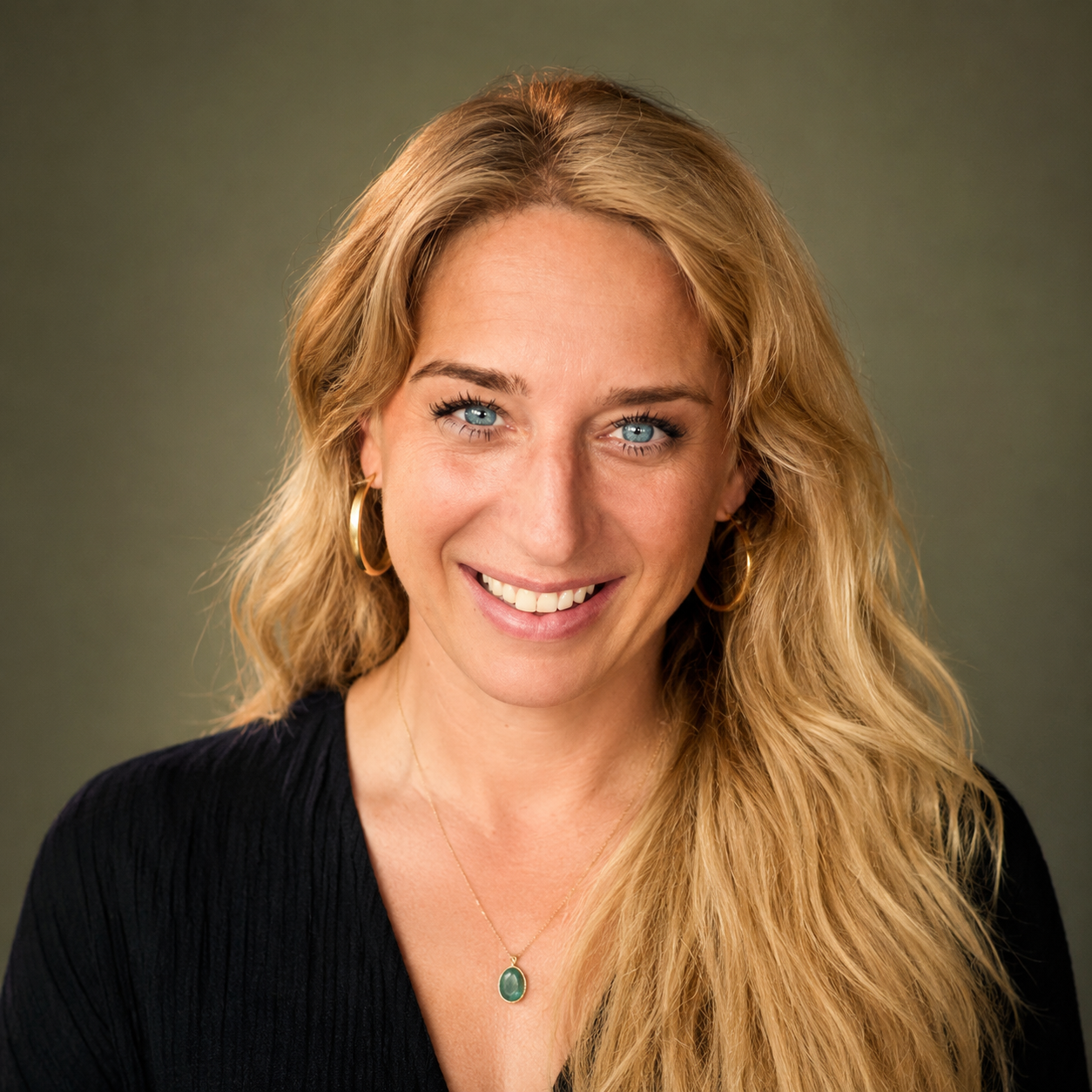
Ilse-Marie Sobering is the founder of House of InnerPower and the creator of the InnerPower Method: LAND • ADEM • VOEL (Land, Breathe, Feel), a cyclical practice of returning to yourself again and again. She has studied yoga philosophy and Eastern philosophy for more than 25 years, and has worked professionally since 2015 as an E-RYT 500 yoga and Yoga Nidra teacher, mindfulness and breathwork coach, Ayurveda practitioner and EFT (Emotional Freedom Techniques) practitioner. In Spain, where she lived for seven years, she taught trainings, teacher trainings and retreats at various locations in the Málaga region, including near Periana, Nerja and Frigiliana. She now works from the Netherlands, teaching trainings and speaking in the Netherlands, in Spain and online. Within the method she works with Yin Yoga, Yoga Nidra, breathwork, meditation, Qigong and somatic work, complemented with elements from her hypnotherapy training. She teaches teacher trainings, continuing education and company training, for people living with long-term stress and for professionals who want to deepen the way they guide others.
